



At present, China's epidemic prevention and control work has made phased progress, but the COVID-19 is still spreading rapidly overseas, and other regions such as Europe and the United States have become the new "epicenter" of the epidemic. For foreign trade enterprises, the road to recovery was particularly difficult due to a shortage of personnel in the first half and a shortage of orders in the second half.
Global trade is declining, putting pressure on the foreign trade industry
Since March, the overseas epidemic has shown a pandemic trend, with production and consumption shrinking in affected countries, frequent stock market fluctuations, significant reduction in trade activities, and the risk of global economic recession constantly accumulating. International institutions such as the International Monetary Fund and the OECD have lowered their global economic growth forecasts for this year, and the World Trade Organization predicts a significant decline in global trade this year.
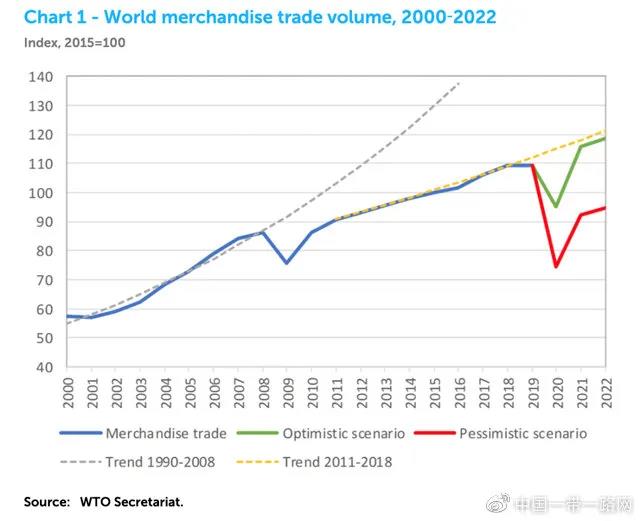
Li Yang, Deputy Director of the Industrial Investment Research Office at the CCID Think Tank Planning Institute of the Ministry of Industry and Information Technology, analyzed that currently, the epidemic is in an outbreak period in European and American countries. The economic situation in these countries has not been good in recent years. After the epidemic, a large number of factories have stopped working and consumption has stagnated. It is expected that Chinese products will experience significant demand contraction in these markets throughout this year.
UBS Chief Economist Wang Tao also holds the same view. He said frankly that although economic activities began to recover gradually at the end of February, the impact of the COVID-19 epidemic will continue for some time, and the blocking of global supply chain and trade logistics may also increase, further stressing China's import and export activities.
According to investigations, thousands of foreign trade enterprises in China have been forced to delay shipments and remittances, and even some orders have been transferred. The peak period for export orders is from March to May every year, but many foreign trade enterprises have experienced varying degrees of decline in new orders, and logistics congestion has shifted from domestic to international. Many ports in Europe and America have closed, air routes have been suspended, air transport capacity has been reduced by half, and costs have risen significantly. Some high-tech middleware and new materials are facing the risk of supply interruption, and the pressure on the foreign trade industry has doubled.
The "the Belt and Road" trade cooperation is resilient
The impact of the COVID-19 on import and export trade can be seen clearly in the data released by the General Administration of Customs recently. In the first two months of this year, China's foreign trade experienced a significant decline. In US dollars, the total import and export volume decreased by 11% year-on-year, and the export decline reached 17.2%.
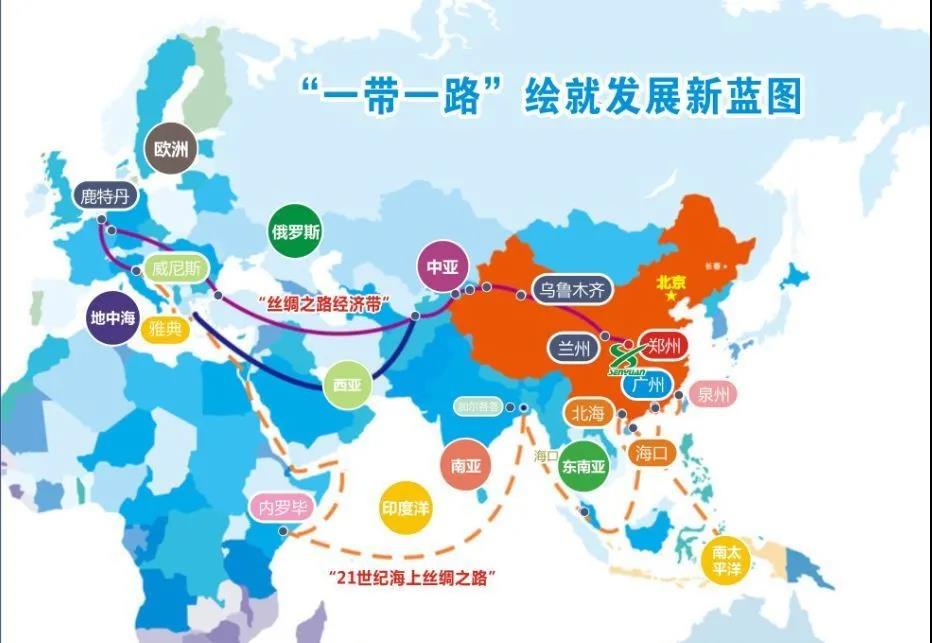
At the same time, however, the total trade between China and the countries along the "the Belt and Road" grew by 0.4% against the trend, accounting for 31.7% of China's total foreign trade, 3.6 percentage points higher than the same period last year, becoming a rare highlight of foreign trade under the epidemic.

In addition, the Ministry of Commerce announced in late February that the overall progress of the "the Belt and Road" cooperation project was stable, and there was no large-scale delay due to the COVID-19. According to a set of data released by China Railway Group on April 3, a total of 1941 China Europe freight trains were operated and 174000 TEUs were sent in the first quarter, an increase of 15% and 18% year-on-year, respectively. The comprehensive heavy container rate reached 98.1%, and the number of trains and goods sent steadily increased. The smooth trade of the "the Belt and Road" has demonstrated the strong vitality of China's economy and injected confidence and power into the recovery of foreign trade enterprises.
Xiong Wei, head of the "the Belt and Road" office of Deutsche Bank, said that the impact of the "the Belt and Road" initiative proposed by China has exceeded expectations from the perspective of regional coverage and economic effects. He pointed out that although the novel coronavirus epidemic is affecting the global economic situation, trade has not been interrupted, "including the role of the the Belt and Road Initiative."
Focus on the "the Belt and Road", and help foreign trade recovery everywhere
Foreign trade is the forefront of China's opening up to the outside world, an important way to promote economic globalization, and an important link to deepen mutually beneficial cooperation. After the outbreak of the epidemic, in order to reduce the negative impact of the epidemic on foreign trade, the Ministry of Commerce, Ministry of Industry and Information Technology, People's Bank of China, Customs, China Council for the Promotion of International Trade, China Export&Credit Insurance Corporation and other departments have successively introduced supportive policies. Guangdong, Zhejiang, Henan, Gansu, Jiangsu, Shandong, Shaanxi, Heilongjiang, Guangxi, Jiangxi and other places have also successively introduced specific measures to help foreign trade enterprises overcome difficulties.

Recently, in the "the Belt and Road" work plan issued by various regions, stabilizing foreign trade is also the focus of their attention.
In the 2020 Key Points for Zhejiang Province to Build an Important Hub of the "the Belt and Road" issued by Zhejiang Province, it is clearly mentioned that we should comprehensively implement the new policy of stabilizing foreign trade, strengthen the layout and cooperation of the global industrial chain, optimize the "going out" service policy of enterprises, promote the implementation of factor support policies, and strengthen the financial policy service guarantee.
The 2020 Work Plan for Promoting the Construction of the "the Belt and Road" and the Inland Open Economic Pilot Zone issued by Ningxia mentioned that it is necessary to actively develop new business types and new models such as cross-border e-commerce, service trade and service outsourcing, help enterprises reduce operating transaction costs and establish overseas marketing service centers, and steadily increase the proportion of total imports and exports to countries along the "the Belt and Road".
The 2020 Action Plan for the Construction of the the Belt and Road in Shaanxi Province emphasizes the cultivation of new forms and models of foreign trade. Pointing out the need to solidly promote the construction of Xi'an Cross border E-commerce Comprehensive Pilot Zone and Foreign Trade Comprehensive Service Platform; Cultivate various foreign trade clusters such as national foreign trade transformation and upgrading bases, provincial-level characteristic export bases, and actively create national level import trade promotion innovation demonstration zones.
In addition, at the meeting of the leading group of actively integrating into the "the Belt and Road" to accelerate the construction of inland open highlands, Chongqing proposed to optimize the open environment and increase the openness in manufacturing, service industry, agriculture and other fields; At the meeting of the Leading Group Office for Promoting the Construction of the "the Belt and Road" in Jiangsu Province, it was emphasized that necessary assistance should be given to major projects and key enterprises related to the overall work of this year, to help employees in low-risk areas speed up their return to work, and to organize the supply of domestic means of production to catch up with overseas demand.
At the beginning of the epidemic, the "the Belt and Road" foreign trade grew against the trend. With the current epidemic, the "the Belt and Road" cooperation has become an important driving force for foreign trade in various regions. It is believed that the "the Belt and Road" trade cooperation will bring more opportunities and possibilities for the recovery of foreign trade enterprises.
Record Number:Su ICP No. 2025223742-1
Sheyang Tianyuan Chemical Co., Ltd Copyright(C)2017 Network Support 思科网络 Copyright Statement Sitemap